
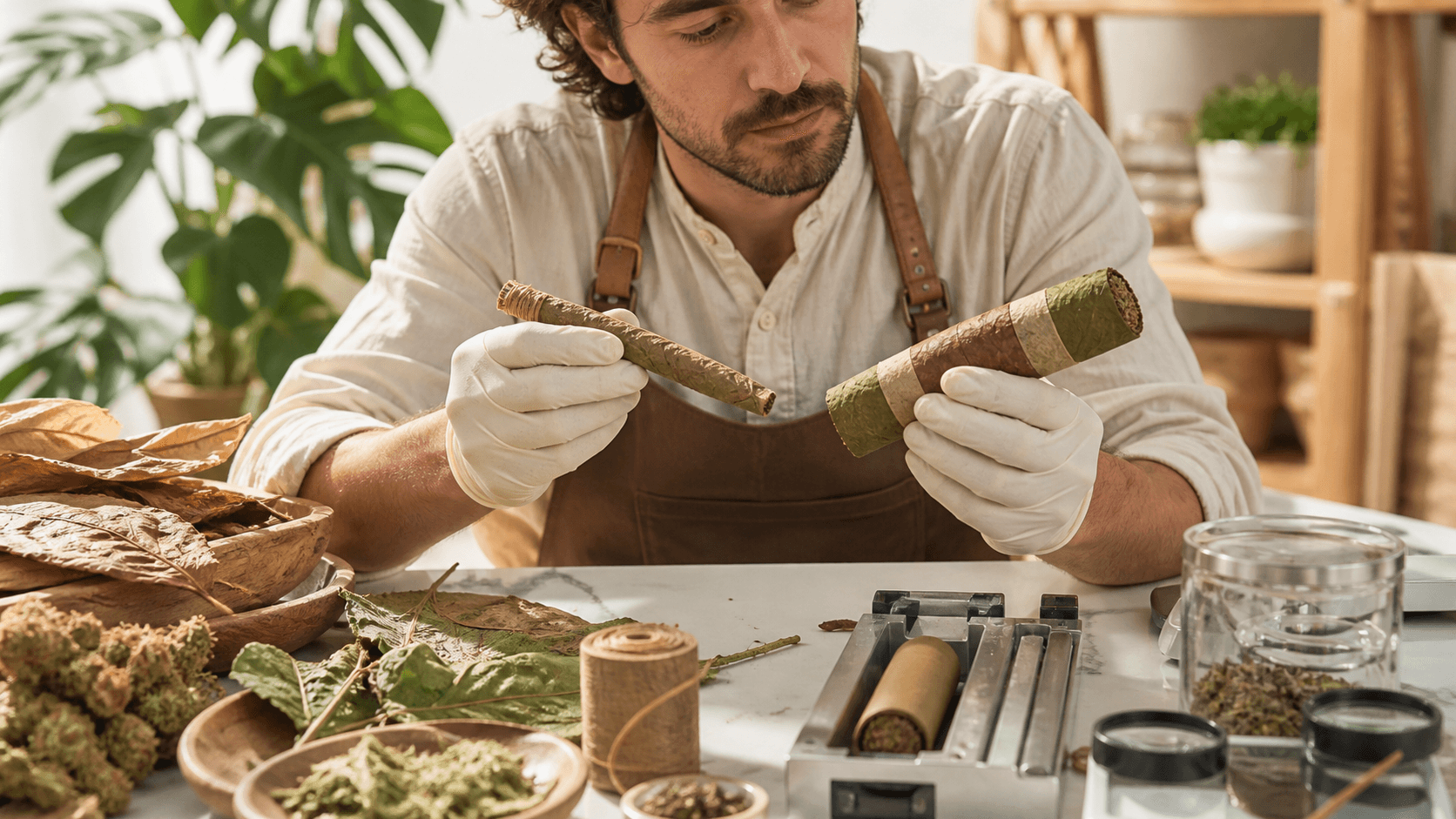
Elevate Your Sessions Without Losing the Classic Vibe
The old Thai stick sessions had a certain magic. Slow, social, hands working while stories rolled around the circle. It was about craft as much as it was about getting lit. Even now, in a world full of quick hits and disposable gadgets, that classic ritual still pulls us in.
Cannagars and blunt rollers bring that same long-lasting, event-style smoke into today. We get the long burn, the big flavor, the group session, but with more control over airflow, potency, and build quality. The trick is doing all that without losing the heart of the Thai stick.
In this guide, we will walk through how to pick wraps, twine, and concentrates that fit modern rules and safety expectations, while keeping that old-school feeling. We will also talk about how tools like molds and blunt rollers help us keep the ritual and ditch the frustration.
From Thai Sticks to Cannagars: What Really Changed
Classic Thai sticks started simple and smart. Growers would:
- Spear whole buds on a thin stem
- Wrap them tight in cannabis leaves
- Bind them with hemp or silk thread
- Often coat them in hash oil
- Cure them until they burned slow and smooth
That curing and wrapping work gave them their smooth hit and long burn. But they could be uneven, tricky to build, and hard to repeat the same way every time.
Modern cannagars keep the idea and upgrade the method. Instead of spearing buds, we compress ground flower into a mold to form a dense, even core. From there we can:
- Add a concentrate core inside
- Paint or dip the outside with oil or rosin
- Wrap with hemp or premium leaf for a cigar-style finish
Cannagars took over because they are more consistent. Molds give us control over:
- Size and weight
- Density, for better airflow
- Potency, when we add concentrates
They also fit better with today's packaging and testing expectations. It is easier to label and repeat something that is built around a fixed mold size instead of freehand rolling on a stem.
Choosing Leaf Wraps Without Killing the Burn
The leaf you choose can make or break the experience. The wrong wrap can run, taste harsh, or fight against your airflow. The right one turns the whole thing into a smooth, slow-burning event.
Common wrap options include:
- Cannabis fan leaves, for that true Thai stick vibe
- Cigar-style broadleaf or Connecticut-style leaves
- Hemp wraps, often less harsh and tobacco-free
- Low-odor hybrid wraps, for more discreet holiday sessions
Many people are moving away from cheap tobacco wraps because of flavoring rules, heavy metal worries, and sketchy additives. Hemp and cannabis leaves are popular because they can be tested and feel cleaner for the lungs and the ritual.
To keep that classic experience alive, focus on:
- Curing and storing leaves: Slightly pliable, not wet and not crispy
- Matching leaf to material: Lighter leaves with fruity flower, darker leaves with gassy strains and rich rosin
- Building a tight, even core: Using a mold helps the wrap sit snug so the burn stays straight
With a solid mold or blunt roller in the mix, we can pack the flower evenly, then lay on the leaf in smooth, overlapping layers. This lets us keep the Thai stick look and feel, but with a more reliable burn.
Twine, Cores, and Concentrates That Pass Scrutiny
Binding and infusion are where tradition meets modern standards. Old Thai sticks often used silk or simple hemp thread. Today, we have to think more carefully about what we are literally burning and breathing.
For twine and binding, many people now lean toward:
- Food-grade hemp twine
- Biodegradable plant fiber options
- Un-dyed, unflavored, lab-checked materials where possible
You want something that holds your wrap tight while it cures, then either gets removed or burns without strange flavors.
Then there is the concentrate choice. Common options include:
- Rosin, pressed without solvents for a clean, strong flavor
- Distillate, more neutral and easy to work with
- Live resin, terp-heavy and bold
Solventless rosin is getting more love because it keeps strain character and feels closer to that old-school hash oil vibe, but with better control.
Placement matters too:
- Core: A strip or rope of concentrate through the center can boost potency and keep flavor consistent all the way down
- Outer coat: A painted or dipped shell adds punch to the first half, then eases up as you smoke
If you care about testing and labels, learning to read COAs for your concentrates is key. Look at cannabinoid levels, any residual solvents, and terp profile. When we pair that with a fixed-size mold, it becomes much easier to build repeatable, label-ready cannagars for personal use or small batches.
Tools That Keep the Ritual, Ditch the Frustration
Freehand Thai stick builds are beautiful, but they can be painful. Uneven buds, loose spots, and random canoeing can ruin a special session.
Molds help by:
- Giving consistent density so airflow stays steady
- Making it simple to add a concentrate core in the same spot every time
- Cutting down on lopsided burning and hot spots
Blunt rollers work right alongside molds. While your packed core cures, you can:
- Prep your wrap leaf or hemp wrap in a roller
- Train the leaf into a cigar-style tube
- Create smoother, more uniform outer layers
A simple step-by-step workflow looks like this:
- Grind your flower to an even texture
- Pack it tight into a mold, using a packing tool
- Let it cure so it holds its shape and burns slower
- Wrap it carefully with your chosen leaf
- Bind it with clean hemp twine until the leaf sets
- Optionally coat with rosin or other concentrate, then rest before lighting
The ritual is still there. Hands-on, patient, craft-focused. The tools just remove the random failures that used to come with it.
Craft Your Next-Level Thai Stick Session
As the weather cools and spooky season hits, it is a perfect time to test your own Thai stick style cannagar before the bigger winter gatherings. One or two practice runs now can help you dial in leaf type, twine, and concentrate placement so your next group session feels smooth and intentional.
A simple starter setup is a cannagar mold from Purple Rose Supply, a quality blunt roller, clean hemp twine, and a favorite solventless concentrate. From there, you can start to build a signature style: changing leaf types, swapping strains, testing different rosins, and playing with core versus outer coat.
We are here for people who love the ritual as much as the result. With smart materials, attention to safety, and the right tools, you can keep the heart of the Thai stick alive while enjoying smoother, more reliable cannagars every time you light up.
Master The Art Of Slow-Burning Cannagars Today
Ready to roll something that actually lives up to your flower and your time? Follow our step-by-step guide to crafting a premium Thai stick and experience smoother, longer-lasting sessions. At Purple Rose Supply, we give you the tools and know-how so you can create impressive cannagars at home with consistency. If you have questions or need help getting started, contact us and we will point you in the right direction.